Arena Championship 13 is this weekend, October 24–25!
During this high-stakes digital event, 176 of the best MTG Arena players will battle for their share of a $250,000 prize pool. The Top 16 will earn invitations to Pro Tour Nauctis in February 2027, and the two finalists will secure their seats for Magic World Championship 33 in December 2027. Every round will be Standard, and you can watch it all live on twitch.tv/magic and the Play MTG YouTube channel starting at 9 a.m. PT each day. For the full schedule and prize breakdown, check out the Arena Championship 13 Viewer's Guide.
Who Is Competing?
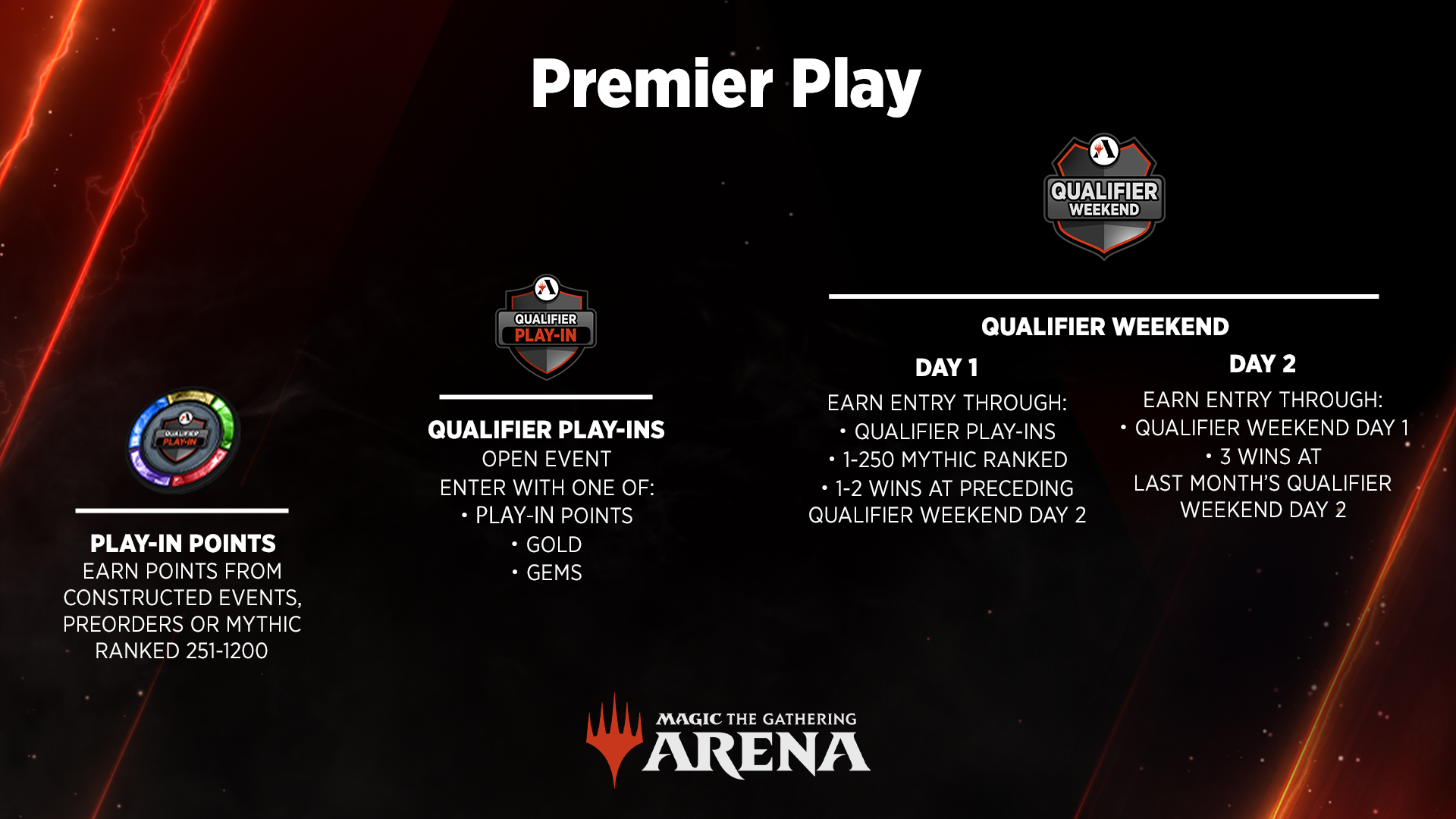
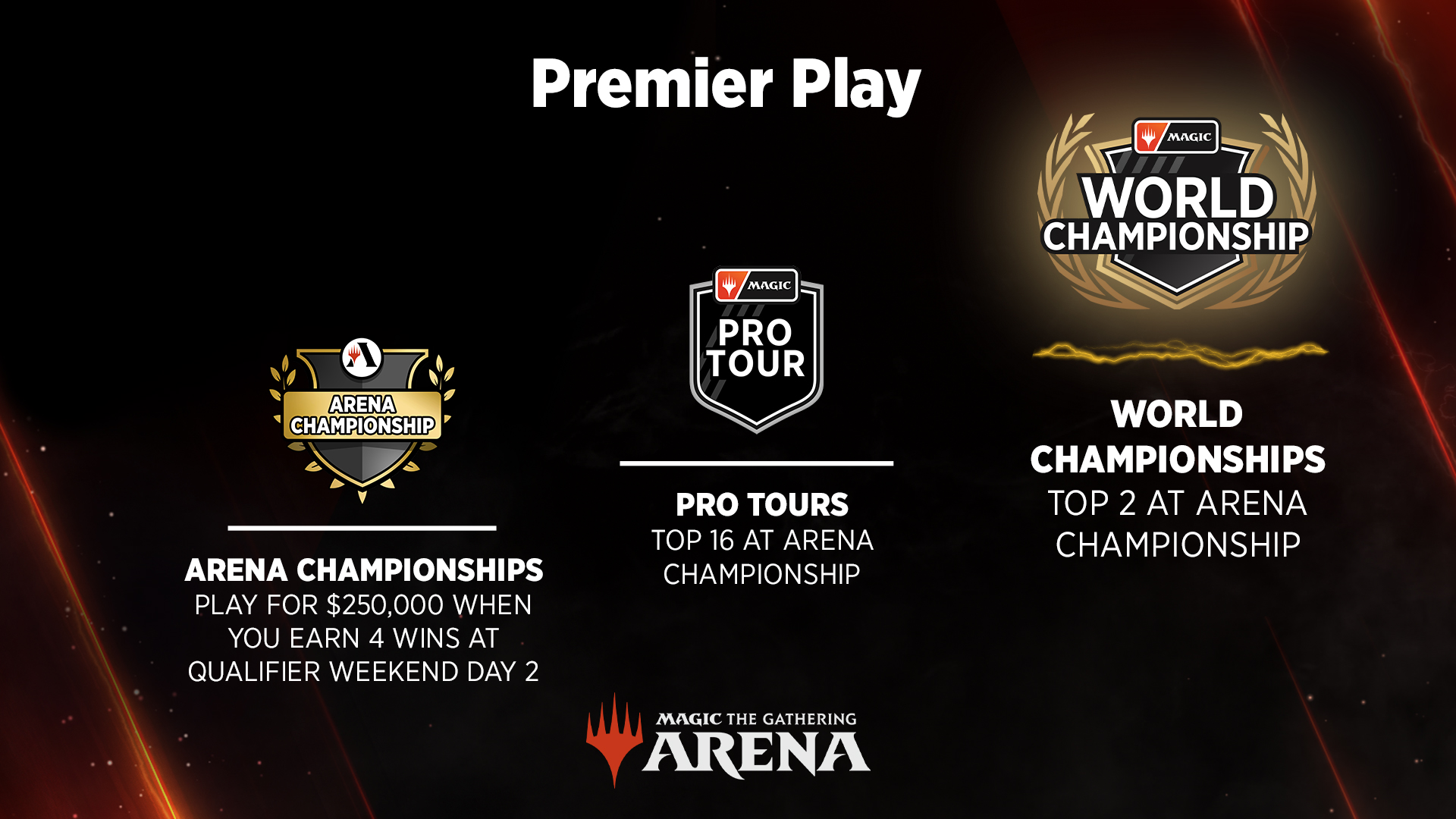
Every competitor earned their seat through an MTG Arena Qualifier Weekend by advancing to Day Two and winning four matches there. As the pinnacle of competitive play on MTG Arena, the Arena Championship features a wealth of talent, including some of the most decorated names in Magic history. Four Hall of Famers and at least eight Pro Tour champions have qualified. Here are just some of the standout competitors:
- Reid Duke, Hall of Famer and champion of Pro Tour Phyrexia
- Raphaël Lévy, Hall of Famer and 2013 World Magic Cup champion with Team France
- Olivier Ruel-Mailfert, Hall of Famer with five Pro Tour Top 8s
- Tsuyoshi Fujita, Hall of Famer and the first Japanese player to reach a Pro Tour Top 8
- Nathan Steuer, champion of Magic World Championship XXVIII, Pro Tour March of the Machine, and Pro Tour Secrets of Strixhaven
- Simon Nielsen, champion of Pro Tour Modern Horizons 3 and 2023 Player of the Year
- Yuuki Ichikawa, champion of Pro Tour Magic: The Gathering® | Marvel Super Heroes
- Michael DeBenedetto-Plummer, champion of Pro Tour Edge of Eternities and Arena Championship 10
- Ondřej Stráský, champion of Mythic Championship VI and finalist at Arena Championship 10
- Yoshihiko Ikawa, champion of Pro Tour Outlaws of Thunder Junction
They're joined by plenty of other proven contenders, including Arena Championship 12 champion Satoshi Nakayama, 2003 World Champion Daniel Zink, World Championship 31 runner-up Akira Shibata, Pro Tour Lorwyn Eclipsed finalist Toni Portolan, and Kaldheim Championship winner Arne Huschenbeth. Their résumés span tabletop Pro Tours and digital championships alike, underscoring that the instincts behind a perfectly sequenced turn translate seamlessly from cardboard to client.
While these accomplished competitors are among the early favorites, every player in this stacked field has the skill and talent to make a deep run.
Standard Metagame Breakdown
Standard currently features every set from Wilds of Eldraine through Reality Fracture. The newest set arrived on MTG Arena just a few weeks ago and has already shaken up the format, but the established powerhouses haven't gone anywhere.
Day One features nine rounds of modified Swiss, where players continue to compete until they reach either seven wins or three losses. Depending on how many players reach seven wins, Day Two may open with a few Top 16 qualification matches, followed by a single-elimination Top 16.
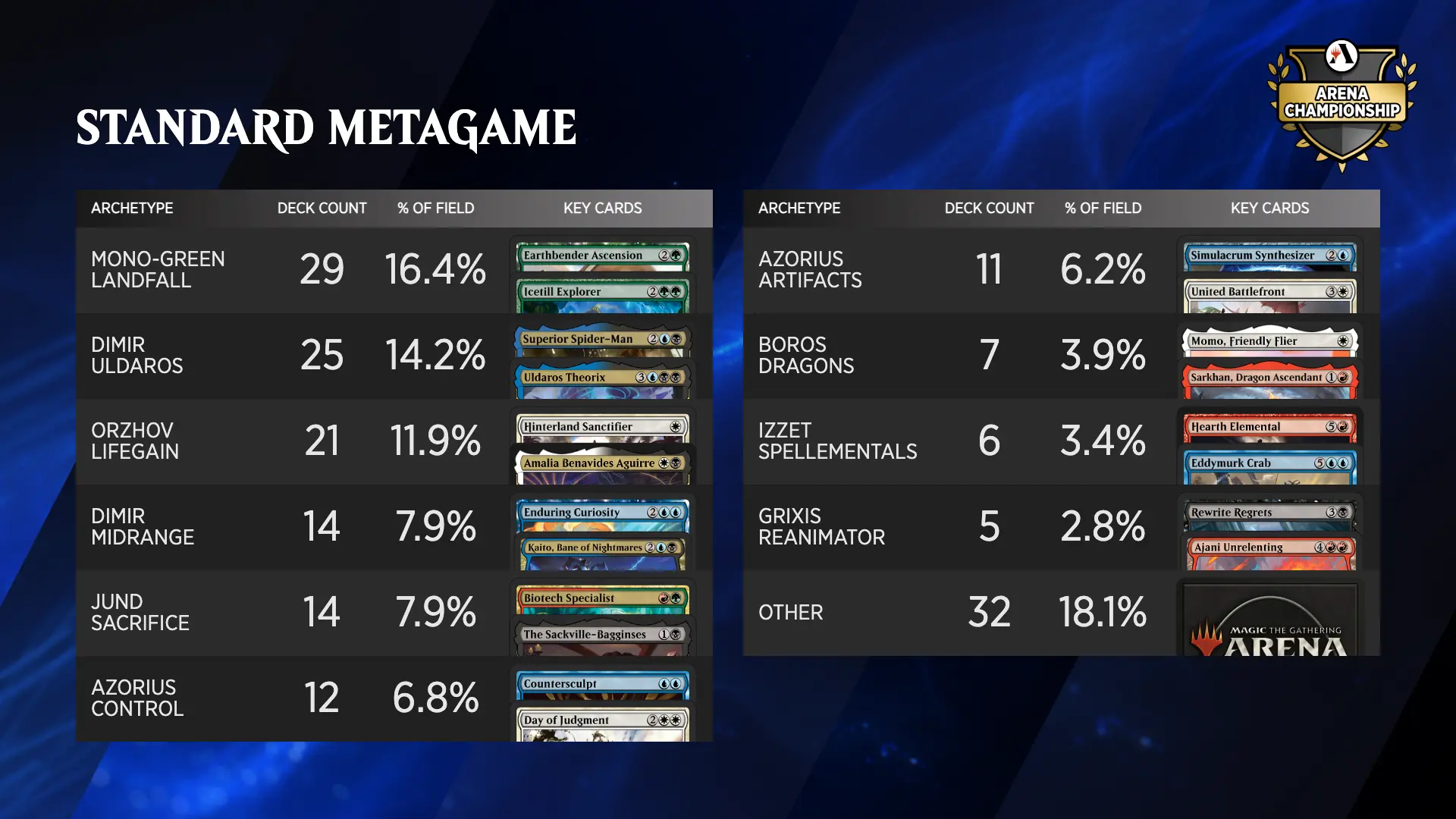
| Archetype | Number of Players | Percentage of Field |
|---|---|---|
| 1. Mono-Green Landfall | 29 | 16.5% |
| 2. Dimir Uldaros | 25 | 14.2% |
| 3. Orzhov Life Gain | 21 | 11.9% |
| 4. Dimir Midrange | 14 | 8.0% |
| 5. Jund Sacrifice | 14 | 8.0% |
| 6. Azorius Control | 12 | 6.8% |
| 7. Azorius Artifacts | 11 | 6.3% |
| 8. Boros Dragons | 7 | 4.0% |
| 9. Izzet Spellementals | 6 | 3.4% |
| 10. Grixis Reanimator | 5 | 2.8% |
| 11. Esper Uldaros | 3 | 1.7% |
| 12. Izzet Prowess | 3 | 1.7% |
| 13. Dimir Excruciator | 3 | 1.7% |
| 14. Four-Color Control | 3 | 1.7% |
| 15. Azorius Momo | 2 | 1.1% |
| 16. Simic Landfall | 2 | 1.1% |
| 17. Sultai Midrange | 1 | 0.6% |
| 18. Mardu Discard | 1 | 0.6% |
| 19. Rakdos Discard | 1 | 0.6% |
| 20. Boros Mobilize | 1 | 0.6% |
| 21. Izzet Fling | 1 | 0.6% |
| 22. Izzet Planeswalkers | 1 | 0.6% |
| 23. Dimir Reanimator | 1 | 0.6% |
| 24. Selesnya Counters | 1 | 0.6% |
| 25. Selesnya Offense | 1 | 0.6% |
| 26. Sultai Reanimator | 1 | 0.6% |
| 27. Esper Oculus | 1 | 0.6% |
| 28. Jeskai Planeswalkers | 1 | 0.6% |
| 29. Mardu Gambit | 1 | 0.6% |
| 30. Boros Dwarves | 1 | 0.6% |
| 31. Mono-Red Prowess | 1 | 0.6% |
| 32. Selesnya Reclaimer | 1 | 0.6% |
Earthbender Ascension
Icetill Explorer
Mono-Green Landfall is the most popular archetype with 29 players, or 16.5% of the field. That marks a firm rebound: in the first week of Reality Fracture results, the deck had slipped to a five percent winner's metagame share, but the Arena Championship 13 competitors evidently still trust its raw power.
The real story, however, is the impact of Reality Fracture. Dimir Uldaros, a new archetype built around Reality Fracture's
Orzhov Life Gain rounds out the top three with 21 players, buoyed by
One notable absence from the top tier is Izzet Spellementals. It led the winner's metagame chart in September, but with little of note to gain from Reality Fracture, only six players chose it this weekend.
Bitter Triumph
Duress
Overall, this Standard metagame reveals a highly interactive format where cheap disruption can make all the difference.
Sideboards tell the same story. The four most-played sideboard cards—
Standard Deck Summaries
All decklists will be available on Melee and the Arena Championship 13 event page once the tournament begins. Until then, here are brief summaries of each archetype represented in the field.
Mono-Green Landfall (29 players): This deck turns every land drop into value.
Dimir Uldaros (25 players): The breakout deck of Reality Fracture, which turns the graveyard into a source of card advantage.
Orzhov Life Gain (21 players): This deck turns small life-gain triggers into a big board.
Dimir Midrange (14 players): This is a more traditional approach to blue-black, a classic blend of removal and counterspells backed by cheap, evasive threats.
Jund Sacrifice (14 players): This combo deck converts artifact tokens into direct damage. With
Azorius Control (12 players): Countermagic, sweepers, and spot removal carry the deck to the late game, where
Azorius Artifacts (11 players):
Boros Dragons (7 players):
Izzet Spellementals (6 players): A pile of cheap instants and sorceries draws cards, interacts early, and fills the graveyard for
Grixis Reanimator (5 players): The deck discards its biggest threats and brings them back with
Esper Uldaros (3 players): This is essentially Dimir Uldaros, with a white splash for
Izzet Prowess (3 players):
Dimir Excruciator (3 players): This is the deck that carried Christoffer Larsen to victory at Pro Tour Lorwyn Eclipsed. Instead of overwhelming the opponent with repeated graveyard value, it aims to leave them with almost no library.
Four-Color Control (3 players):
Azorius Momo (2 players):
Simic Landfall (2 players): This deck has the same core as Mono-Green Landfall, with a blue splash for
Sultai Midrange (1 player):
Mardu Discard (1 player):
Rakdos Discard (1 player): The same discard theme without white but featuring
Boros Mobilize (1 player):
Izzet Fling (1 player): Pump effects like
Izzet Planeswalkers (1 player): A deck loaded with planeswalkers, led by
Jeskai Planeswalkers (1 player): A similar planeswalker theme, backed by white sweepers and spot removal.
Dimir Reanimator (1 player):
Sultai Reanimator (1 player): The same reanimator plan, with green for extra self-mill and search effects.
Selesnya Counters (1 player):
Selesnya Offense (1 player): An aggressive deck that uses
Esper Oculus (1 player):
Mardu Gambit (1 player):
Boros Dwarves (1 player):
Mono-Red Prowess (1 player):
Selesnya Reclaimer (1 player):
The Championship Outlook
With so many viable strategies and so much cheap interaction, this weekend's Standard battles are wide open. Will Mono-Green Landfall justify its spot at the top of the metagame, or will the 39
One thing is certain: 176 players will battle for the $10,000 1st-place prize, sixteen Pro Tour Nauctis invitations, and two seats at Magic World Championship 33. I can't wait to see which decks and which players rise to the top.
Don't miss a moment of the action. Tune in starting at 9 a.m. PT on October 24 and 25 at twitch.tv/magic or on the Play MTG YouTube channel!
