
The Spotlight Series occupies a unique niche in the competitive Magic ecosystem. It's both an accomplishment and a springboard, carrying the dual weight of a prestigious Top 8 and career highlight while also offering spots at the Pro Tour for Top Finishers. That multifaceted nature is reflected in the competitors who make the Top 8 and win the Spotlight Series events, ranging from some of Magic's longtime players and most well-known names to an emerging generation of new talent.
That dichotomy of Spotlight Series Top 8 players has been on display in the first events of 2026, with longtime pros like Simon Nielsen and Willy Edel making the Top 8 at Magic Spotlight: The Avatar in Lyon in January, which Nielsen went on to win, while relative newcomer Eli Swafford made the Top 8 of both Magic Spotlight: The Avatar in Atlanta and Magic Spotlight: Eclipsed in Toronto. Valerie Jade took home the trophy in Toronto, their first Top 8 and win after traveling to Toronto immediately following the Pro Tour in Richmond where they'd barely missed re-qualification the weekend before.
Edel, Nielsen, Jade, Swafford, and the other Spotlight Series Top 8 players are tied together by more than their recent success on the same circuit of events. Their approach to the Spotlight Series, its immediate personal effects, the more far-reaching consequences of their play, and more knit these players, each at a different place in their Magic careers, together.
For players like Edel and Nielsen, who are now veterans of the scene, the Grand Prix that predated the Spotlight Series was sometimes their first taste of competitive success.
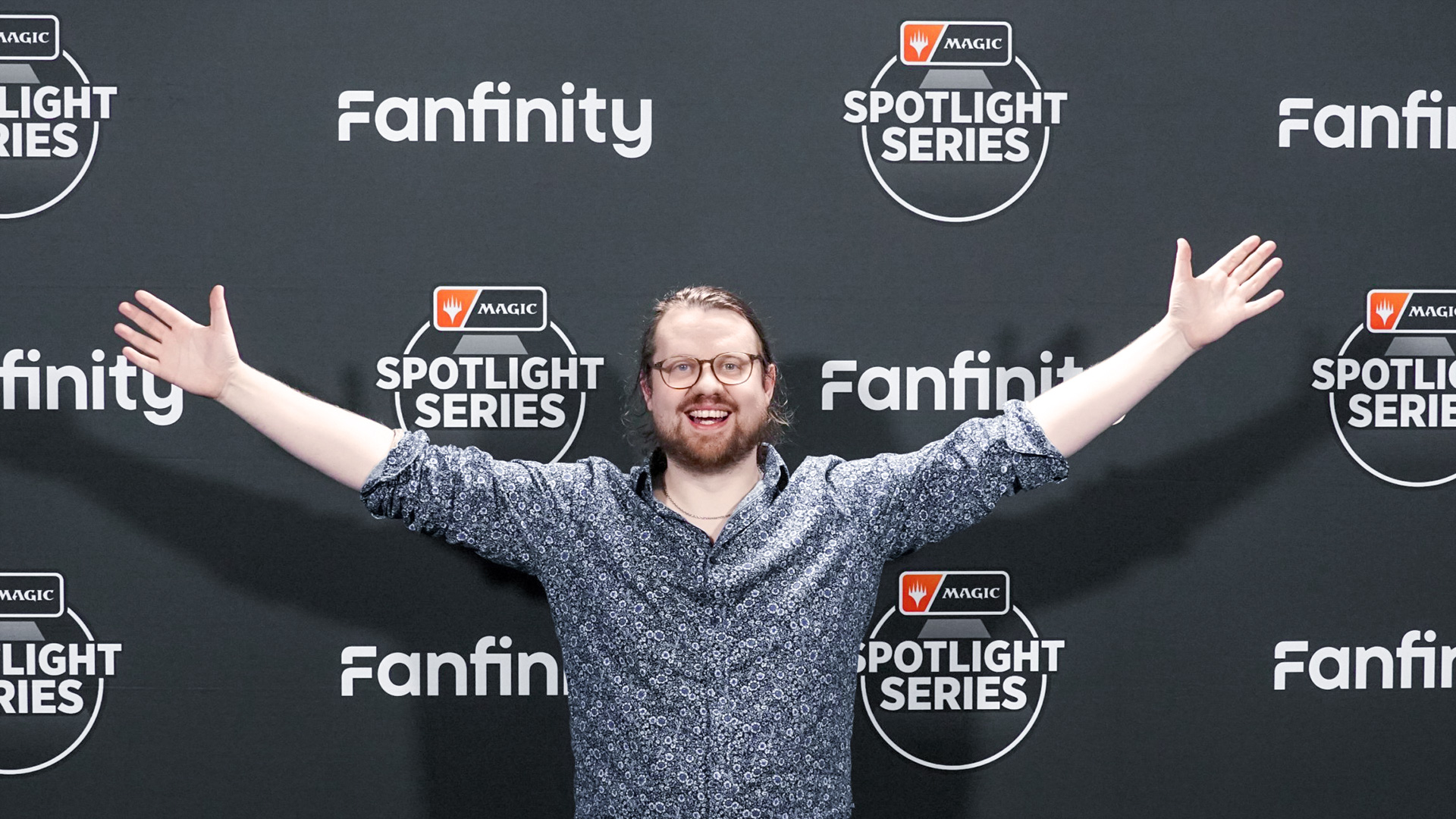
"For me the Grand Prix success was a lot more achievable than Pro Tour success at the time," said Nielsen. "It was way before I actually had any Pro Tour Top 8s and at a time where I couldn't really see myself making the Top 8 of a Pro Tour. Having this medium where I really felt like I could win these events was quite important for having this stepping stone of feeling like the amount of work I put in also yielded some results. I think that was important. Also, it obviously makes my name recognizable for other people on outside teams.
"I got invited to what is now Team Handshake partly because of my Grand Prix success and because, at the time, I had no Pro Tour success, and we still see this now with players like Eli Swafford who we have picked up on Team Handshake because we noticed that he made the Top 8 of two Spotlight Series events in different formats, and that's quite impressive in such a short span of time. It's important to look out for those who maybe don't have Pro Tour successes yet or maybe even hadn't had that many opportunities for Pro Tour success. I think that it's quite important to have that middle step for the competitive circuit."
For Edel, Grand Prix posed their own challenge even as he was achieving Pro Tour success.
"Before my first Pro Tour Top 8, I took Grand Prix events really seriously," Edel said. "I tried to do my best, and maybe I put too much pressure on myself. After I made the Top 8 of the Pro Tour, maybe I started relaxing too much when playing at Grand Prix events. It took me a few years to find a good balance and not play super relaxed but not play super stressed like I would at a Pro Tour. When I found this balance, I started to Top 8 Grand Prix events as well."
That balance led to an eventual eight Grand Prix Top 8 appearances and one win for Edel. For players like Jade and Swafford, only time will tell if this Spotlight Series success is the start of a competitive Magic journey with the durability and peaks of their veteran Top 8 compatriots.
But no matter the course of their longer competitive journeys, Swafford and Jade are already feeling the effects of success. While there are further reaching implications in the community, that change begins in the way they perceive themselves.
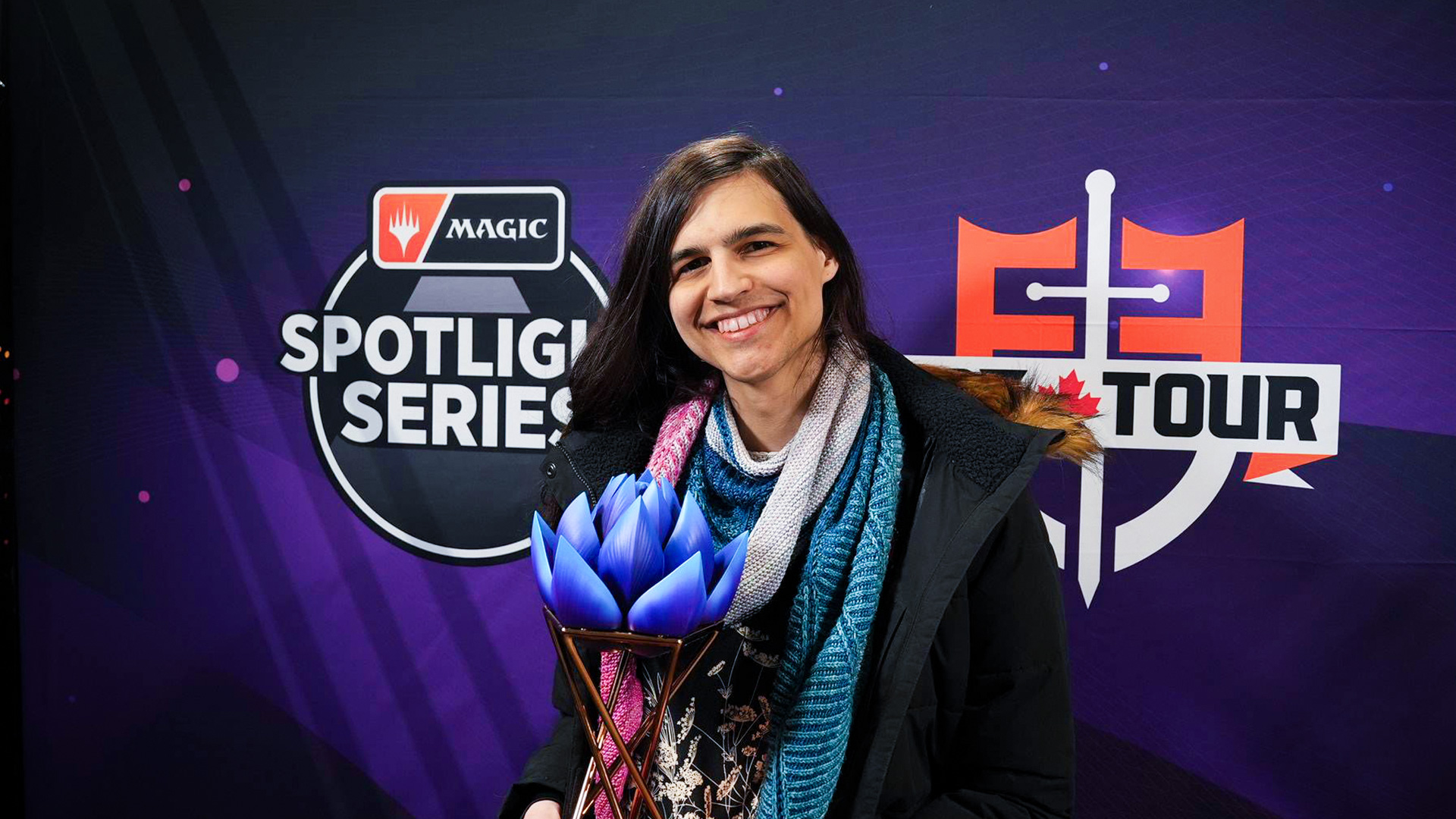
"It definitely has changed my relationship to competing as a whole," Jade said. "There's an immutable success to it. You can't argue with yourself when you actually won the tournament. I can't tell myself I wasn't very good or indulge in other kinds of imposter syndrome or problematic self-talk issues. There's nothing you could say. You can't talk to yourself and be like, 'Well, you didn't do that well' or 'It doesn't count.' No, they handed you a giant trophy, I think you did it."
For Swafford, the two Top 8s were a welcome reprieve from a challenging competitive year in 2025. After making his first Top 8 at Magic Spotlight: Foundations in January 2025, exactly a year before his next Spotlight Series Top 8, Swafford's season took a nosedive.
"I proceeded to do really bad for a year. The following tournaments after that Top 8, I mean, I did okay at the first where I went 9-7, but after that I proceeded to 1-4 three RCs in a row. It was not great. I was just a worse player that year. But coming back this year and being able to put up good results felt very good. I'm very happy to be back on the Pro Tour because of them as well."
While Nielsen has claimed four Pro Tour Top 8s, one win, and a World Championship Top 8 in the three years since the return to in-person play, his win in Lyon resonated with him similarly to Swafford's.
"It was actually quite meaningful for that specific event because it was the first event of 2026 after I had struggled with my mentality in the past year. I started to doubt whether I could actually play as well as I had in 2023 and 2024. Playing an event where there's a lot less pressure, where I could play to my fullest potential, was a great reminder that I can still do what I used to. That felt awesome, and I got to make some really good plays throughout that Top 8. I got out of some tough spots, like the game where I didn't make my second land drop for a few turns and still won. That was quite thrilling to experience. I think it's still quite meaningful to win an event, regardless of the level."
That uplifting effect traveled beyond his win in Lyon, buoying Nielsen through Pro Tour Lorwyn Eclipsed in Richmond.
"At the last Pro Tour, I got to carry this ball of happiness with me instead of this weight of pressure, and I think that was very important. Obviously one of the things I was worried was that I wouldn't re-qualify, but I already had the qualification from the Spotlight Series, so that helped. But even for the mental part of it, I knew I could play good Magic. So, I played good Magic and had a much better Pro Tour for it."
In addition to the immediate personal ramifications of these finishes, consistent success at the Spotlight Series level can also change a player's path forward.

"I was completely on my own," Swafford said of his first Spotlight Series event (and his first Top 8 in 2025). "I was working by myself. I played some games online and showed up to the event. Even at the Pro Tour I went to, I just went by myself. I tested by myself. I didn't really talk with that many people during the event because I didn't know that many people in the scene. After that Top 8, I was completely new to everything."
A year later, Swafford is testing with Team Handshake alongside some of Magic's best players. After traveling to his first Spotlight Series in Atlanta in 2025 because it was a local event for him, Swafford now has a calendar full of Magic travel and teammates to prepare and travel with.
"It's led to getting to know a lot of people in the community. It's definitely been very helpful for me and has benefited me a lot, beyond just the invites."
For Jade, on the other hand, her Spotlight Series Top 8 reshaped her competitive future a lot less. A week before her win, she'd missed re-qualifying for the next Pro Tour by a single match and had subsequently spent the next five days reevaluating her future in competitive Magic.
"I don't think it's going to change a ton," Jade said. "On one hand, I did well in this tournament after preparing the hardest I've ever prepared for a tournament in my life that just happened to be the same format, so it definitely highlights the significance of doing that, but I also don't think that that's something that I can do for more tournaments other than the Pro Tour just because it's so exhausting."
While these four players had their stellar results at the end of the Spotlight Series events this spring, they also shared a common force that drove them to the Spotlight Series in the first place.
"I love playing Magic, and hanging out with friends is honestly the biggest part of it," Jade said. "I'd already planned to go, and there wasn't another chance to qualify for the next Pro Tour. It wasn't a high-EV decision. It's just like, 'Wow, I'm going to have a lot of friends there that I think are really cool.' And I really like doing this. That's my motivation for pretty much every Magic tournament I go to."

"When I play at the Spotlight Series, I try to make the most of it by meeting my friends, trying to help them reach their higher goals, and having fun," Edel said. "I feel like the Pro Tour is where you can test yourself against the best and test my limits. And, of course, there's all the glory and everything. I think the Spotlight Series is much lighter. You have a lot of fun and play much more relaxed. They're different events, but they complement each other very well.
"Grands Prix were much more enjoyable than the Pro Tour because a Grand Prix was an open event. I could play those with my local friends. At the same time, they could dream of going to the next level and want to play against the best. I think the Spotlight Series and events like Grands Prix are the best because they bring all these things together. You are playing at the highest level, especially deeper into Day Two or the Top 8, against very good opponents, but at the same time you travel with your local friends. If you didn't do well on Day One, you can play side events or team side events on Day Two with your friends who you would never get to play with at really big competitive events."
Simon Nielsen also celebrated the more casual environment of the Spotlight Series. "It was this opportunity to play a bit of Magic that is lower stakes than what I'm used to with the Pro Tour, and it's nice to have this opportunity to choose to play Magic when I want to," Nielsen said. "What I really like about them from my perspective is that I don't have to play them. If I want to, I can just play the four big events a year and that's it, then I can do commentary or do other things on the Spotlight Series weekends. But if I want to play, I can go play. And that's really nice, to have that opportunity. That doesn't mean I want to show up and just play whatever, do whatever. Competitive Magic is really fun when I get to prepare for it and put effort in. Magic is really fun when you get to prepare for something."
For players one year or twenty years into their competitive journey, a Spotlight Series Top 8 still has its own allure. Winning is an immutable success. There is nothing more to do, no different choices to have made to achieve a better outcome.
Or, as Edel said, "A trophy is a trophy. Especially because I haven't received a winner's trophy in over a decade. My last one was in Toronto in 2012, fourteen years ago, and I would really enjoy having a trophy. I have two kids, and every time I travel, they say, 'Okay, bring the trophy home, Dad.' I feel like it would be pretty cool to get a trophy at this point in my life."