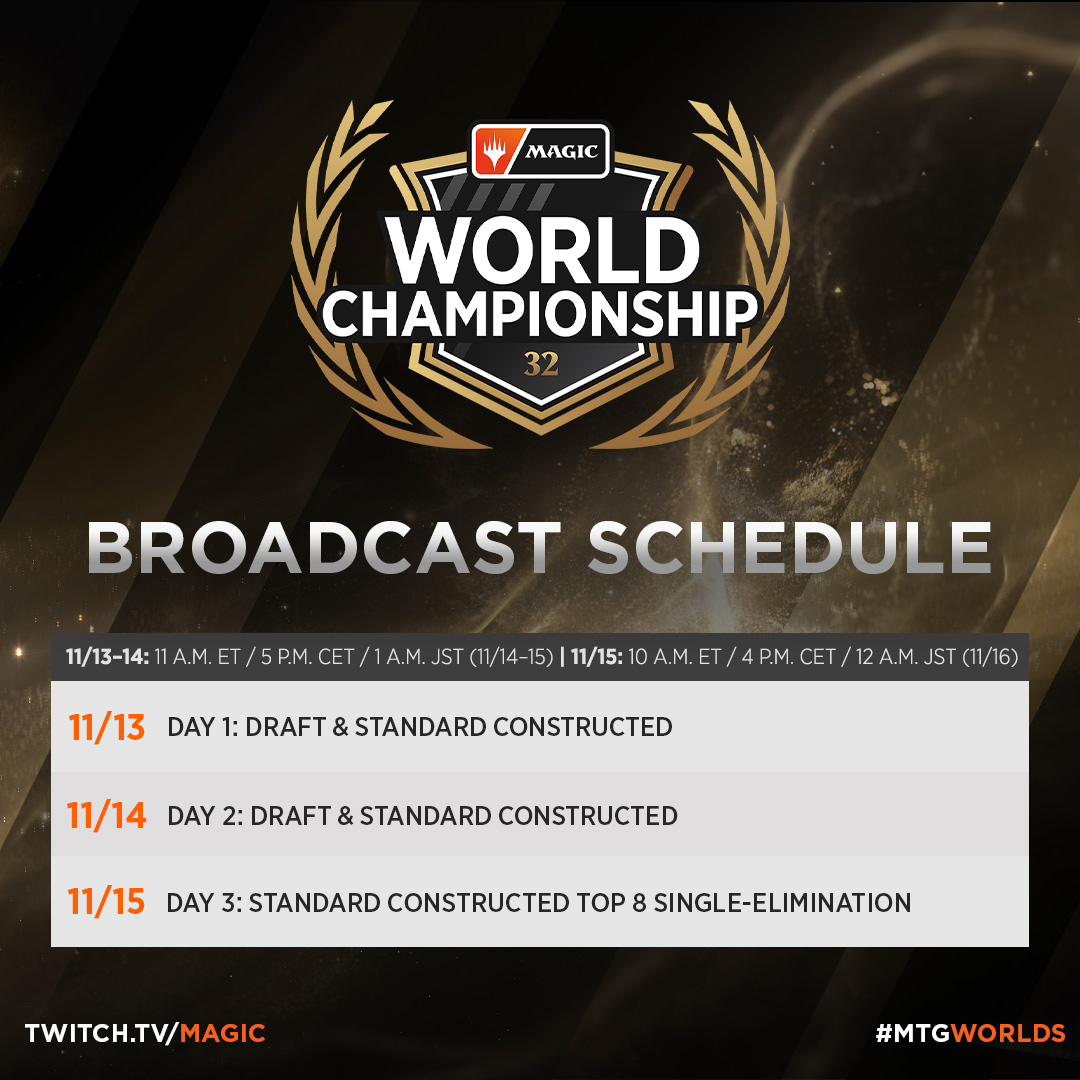
Hello, and welcome back to Metagame Mentor, your weekly guide to the top decks and latest Constructed developments on the path to the Pro Tour. We're now just eight days away from Magic World Championship 32—the yearly capstone event that crowns the 2025–26 season, where 134 of the world's best players will battle in Standard and Draft for the coveted title of World Champion.
While the viewer's guide contains all the practical details on the event, today's article offers an early look at what to expect in the Standard rounds. To that end, I'll draw on the results of three premier Standard events from the past few weeks: Arena Championship 13, Magic Spotlight: Fracture in Hartford, and Magic Spotlight: Fracture in Beijing.
I'll break down the decks that performed well at these events, examine win rates across archetypes, and walk through the twelve most popular decks in Standard. I'll conclude by highlighting several Magic: The Gathering® |Star Trek™ cards that could make their way into the metagame. Since the new set will be legal at the World Championship (it launches on MTG Arena on November 10, just a few days before the tournament), it presents the competitors with an exciting deck-building puzzle.
The Standard Metagame Before Magic: The Gathering | Star Trek
Standard, the rotating 60-card format that currently allows expansion sets from Wilds of Eldraine forward, is one of Magic's premier competitive formats. It's the format for both the current and upcoming rounds of Regional Championship Qualifiers, and it was also the format for three recent premier events, which awarded a total of 32 Pro Tour invitations plus $350,000 in prizes.
Congratulations to the new champions! At Arena Championship 13, Gage Fevold piloted Orzhov Life Gain to victory over Jeff Lin's Mono-Green Landfall in the finals. Both Magic Spotlight: Fracture events went to Jund Sacrifice: Alex von Stange emerged victorious in Hartford and Que Mo lifted the Black Lotus-themed trophy in Beijing. You can find additional photos, decklists, standings, brackets, and content on the Magic.gg events page.
Across these three tournaments, I had a total of 1,810 Standard decklists to analyze. The table below shows the combined raw metagame numbers, along with the match win rates for each deck archetype (excluding mirror matches, byes, and draws). I classified archetypes myself based on each deck's contents, disregarding any self-reported deck labels on Melee.
In this table, each archetype name links to a top-performing decklist that closely reflects its aggregate build. The "Other" category includes decks with a metagame share below one percent, such as Sultai Reanimator, Izzet Fling, Jeskai Planeswalkers, Jeskai Artifacts, Boros Mobilize, Selesnya Offense, Dimir Control, Mardu Discard, Temur Omniscience, Azorius Prison, Mono-Red Aggro, Dimir Oculus, Jeskai Control, and more.
Through 2026's steady stream of releases, bans, and premier events, Standard has remained remarkably vibrant. To provide context, let me first take you back to May, the month of our last Standard Pro Tour and Standard Regional Championships. At Pro Tour Secrets of Strixhaven, Izzet decks dominated the metagame, yet the finals featured a Landfall mirror in which Nathan Steuer defeated Christoffer Larsen. Soon after, Four-Color Control and Selesnya Offense emerged to crush the Regional Championships. Since then, we've seen three new set releases and a round of bans, each leaving a lasting mark on the format:
- Magic: The Gathering® | Marvel Super Heroes: This set offered We Say Thee Nay!, The Wondrous Wasp, and Hidden Lair, which helped propel Dimir Midrange back into competitive Standard. It also introduced Castle Doom, boosting the consistency of Azorius Artifacts.
- The August 10 bans: Badgermole Cub, Stormchaser's Talent, and Gran-Gran were banned, dealing heavy blows to Selesnya Offense, Izzet Prowess, and Izzet Lessons while shaking up the broader metagame. Not every top deck suffered, though. Izzet Spellementals didn't lose a single card, and Mono-Green Landfall was never truly dependent on Badgermole Cub, so it simply adapted and remains the most-played deck today.
- Magic: The Gathering® | The Hobbit™: With The Sackville-Bagginses for Jund Sacrifice; Smaug the Magnificent for Boros Dragons; and Thorin, Mountain-king for Boros Dwarves, this set bolstered three relatively new archetypes, further diversifying the metagame.
- Reality Fracture: This set introduced several standout new blue cards. The Theorist, Jace Beleren leads the pack, joined by Seasoned Cryomancer and Uldaros Theorix in the new Dimir Uldaros deck and backed by Countersculpt and Jace's Machinations in the resurgent Azorius Control deck. Beyond blue, Enlightened Confidant and Liliana the Faultless strengthened Orzhov Life Gain.
Reality Fracture is clearly one of the most impactful sets of the year. When I tallied the number of copies of each card by set across all the decks I analyzed, it ranked second out of the twenty sets in Standard, trailing behind Magic: The Gathering Foundations. As the arrows in the metagame table indicate, the three archetypes that received the most important additions from Reality Fracture—Dimir Uldaros, Azorius Control, and Orzhov Life Gain—all rose in popularity over the past two months.
In terms of performance, Jund Sacrifice excelled with a 57.6% match win rate. The entire 95% Clopper-Pearson confidence interval for its win rate sat strictly above 50%, so its strong showing can't be dismissed as mere statistical noise. The deck is inherently powerful, and although cards like Clarion Conqueror and Pinnacle Starcage can efficiently break up some of its synergies, the deck has viable backup plans and real staying power.
Meanwhile, Izzet decks disappointed. Izzet Spellementals gained nothing of note from Reality Fracture. Even though Sunderflock is still effective against Mono-Green Landfall—the most-played deck—the strategy tends to be at a disadvantage against the rest of the field. World Championship competitors will surely take these results into account as they lock in their deck choices.
To highlight the most relevant Standard decks to expect at Magic World Championship 32, at least based on the trio of premier events before the release of Magic: The Gathering | Star Trek, I've compiled aggregate decklists using an algorithm that balances the popularity and performance of individual cards. Let's take a closer look at the twelve most prominent contenders, each representing at least two percent of the metagame.
1. Mono-Green Landfall
13 Forest
4 Earthbender Ascension
4 Sazh's Chocobo
4 Llanowar Elves
4 Mightform Harmonizer
4 Fabled Passage
4 Icetill Explorer
4 Elven Passage
4 Mossborn Hydra
4 Carnivorous Cultivator
3 Ba Sing Se
3 Sapling Nursery
3 Esper Origins
1 Escape Tunnel
1 Demolition Field
3 Meltstrider's Resolve
2 Surrak, Elusive Hunter
2 Torpor Orb
2 Warg Tactics
2 Hard-Hitting Question
1 Sapling Nursery
1 Keen-Eyed Curator
1 Sandman, Shifting Scoundrel
1 Soul-Guide Lantern
Mono-Green Landfall turns every land drop into value. Fabled Passage generates multiple landfall triggers in a single turn, while Icetill Explorer effectively doubles the pace of land drops. When everything comes together, Sazh's Chocobo grows to enormous proportions, Earthbender Ascension piles on additional +1/+1 counters, and Mightform Harmonizer threatens lethal attacks seemingly out of nowhere. Yet the deck also has remarkable staying power in long games thanks to Ba Sing Se, Sapling Nursery, and Esper Origins.
Carnivorous Cultivator
Mono-Green Landfall is currently the most popular deck in Standard, commanding 12.7% of the metagame across Arena Championship 13 and Magic Spotlight: Fracture. Many successful builds have adopted Carnivorous Cultivator from Reality Fracture alongside Elven Passage from Magic: The Gathering | The Hobbit. Carnivorous Cultivator may be a step down from Badgermole Cub, the recently banned two-drop whose slot it fills, but it still ensures consistent curve-outs. It also fits the deck's land-recycling theme, as it can connect to return a fetch land, and its prepared spell can put a utility land into your graveyard for Icetill Explorer.
2. Dimir Midrange
4 Swamp
4 Island
4 Watery Grave
4 Gloomlake Verge
4 Floodpits Drowner
4 Dream Beavers
4 Kaito, Bane of Nightmares
4 Enduring Curiosity
4 Spyglass Siren
3 Requiting Hex
2 Bitter Triumph
2 Soulstone Sanctuary
2 The Wondrous Wasp
2 Restless Reef
2 We Say Thee Nay!
2 Tishana's Tidebinder
2 Shoot the Sheriff
2 Shipwreck Marsh
1 Strategic Betrayal
1 Spell Snare
1 Hidden Lair
1 Wan Shi Tong, Librarian
1 Yuriko, Hope from the Shadows
3 Duress
2 Strategic Betrayal
2 Day of Black Sun
2 Flashfreeze
1 Vren, the Relentless
1 Wan Shi Tong, Librarian
1 Negate
1 Tishana's Tidebinder
1 Annul
1 Disdainful Stroke
Dimir Midrange aims to disrupt opponents with a blend of removal and counterspells while pressuring them with cheap, evasive creatures. Floodpits Drowner, Spyglass Siren, and Dream Beavers apply early pressure before Enduring Curiosity and Kaito, Bane of Nightmares refill your hand.
Kaito, Bane of Nightmares
Kaito deserves a special mention. When I surveyed the World Championship competitors for my recent article on their favorite Standard cards, Kaito, Bane of Nightmares received more votes than any other card. Its admirers praised how it strikes a perfect balance between proactive and interactive Magic, noting that it single-handedly holds up the entire Dimir Midrange deck. With Kaito set to rotate out of Standard when Nauctis: The Sunken Realm arrives in early 2027, Worlds may be the Ninja's final bow on Magic's biggest Standard stage.
3. Dimir Uldaros
4 Swamp
4 Deceit
4 Superior Spider-Man
4 Shipwreck Marsh
4 Watery Grave
4 Gloomlake Verge
4 Restless Reef
3 Uldaros Theorix
3 Bitter Triumph
3 Requiting Hex
3 Seasoned Cryomancer
2 Winternight Stories
2 Undercity Sewers
2 The Theorist, Jace Beleren
2 Theorix Charm
2 Duress
2 Cavern of Souls
2 Overlord of the Balemurk
1 Strategic Betrayal
1 Deadly Cover-Up
1 Multiversal Passage
1 Emeritus of Ideation
1 Spell Snare
1 Vraska's Final Mercy
2 Flashfreeze
2 Day of Black Sun
2 Qarsi Revenant
2 Doomsday Excruciator
1 Duress
1 Disdainful Stroke
1 M.O.D.O.K.
1 Strategic Betrayal
1 Emeritus of Ideation
1 Deadly Cover-Up
1 Spell Snare
Dimir Uldaros is the breakout deck of Reality Fracture, turning the graveyard into a source of card advantage. Seasoned Cryomancer, Theorix Charm, and Overlord of the Balemurk fill the graveyard with powerful cards for Uldaros Theorix, which also happens to be an ideal creature to copy with Superior Spider-Man. By stacking the triggers in the right order, you can resolve the copied Uldaros Theorix's enters trigger first, casting a token copy of Uldaros Theorix from the graveyard before Superior Spider-Man would exile it. You end up with a 4/4 flier named Superior Spider-Man, a 5/5 token flier named Uldaros Theorix, and another enters trigger that lets you cast copies of other cards with total mana value 6 or less from your graveyard for free.
The Theorist, Jace Beleren
Uldaros Theorix
Another explosive turn can unfold when Uldaros Theorix exiles The Theorist, Jace Beleren and Vraska's Final Mercy, whose mana values add up to exactly 6. Since the planeswalker becomes a token, Vraska's Final Mercy can put six loyalty counters on it when you empower Jace, letting you activate Jace's ultimate ability immediately. With so many powerful interactions, Uldaros Theorix has established itself as a more appealing main-deck six-drop than Doomsday Excruciator.
4. Izzet Spellementals
6 Island
4 Sunderflock
4 Eddymurk Crab
4 Opt
4 Prismari Charm
4 Steam Vents
4 Spirebluff Canal
4 Sleight of Hand
4 Riverpyre Verge
4 Hearth Elemental
3 Burst Lightning
3 Traumatic Critique
2 Spell Snare
2 Get Out
2 Impractical Joke
2 Winternight Stories
1 Spell Pierce
1 Stormcarved Coast
1 Multiversal Passage
1 Flow State
3 Colorstorm Stallion
2 Hydro-Man, Fluid Felon
2 Sunspine Lynx
1 Disdainful Stroke
1 Spell Snare
1 Annul
1 Broadside Barrage
1 Flashfreeze
1 Ghost Vacuum
1 Fire Magic
1 Avengers Disassembled
Izzet Spellementals runs a high density of cheap instants and sorceries that draw cards, interact early, and fill the graveyard for Eddymurk Crab and Hearth Elemental. Because both creatures are Elementals, they can reduce the cost of Sunderflock to just two or three mana, allowing you to sweep your opponent's board back into their hand and swing the game dramatically in your favor.
Sunderflock
Hearth Elemental
Although the deck made up 7.5% of the metagame across Arena Championship 13 and Magic Spotlight: Fracture, it posted a mere 44.3% win rate, suggesting that it's poorly positioned in the current Standard metagame. I would be surprised to see it emerge as a popular choice at the upcoming World Championship.
5. Jund Sacrifice
4 Greedy Freebooter
4 Obsessive Pursuit
4 Lively Dirge
4 Biotech Specialist
4 Blooming Marsh
4 The Sackville-Bagginses
4 Gene Pollinator
4 Starting Town
3 Umbral Collar Zealot
3 Stomping Ground
3 Blood Crypt
3 Overgrown Tomb
3 Torch the Tower
2 Blazemire Verge
2 The Misty Mountains Cold
2 Magda, the Hoardmaster
1 Swamp
1 Forest
1 Smaug the Magnificent
1 Mountain
1 Requiting Hex
1 Wolverine, Fierce Fighter
1 The Ooze
3 Duress
3 Strategic Betrayal
1 Professor Dellian Fel
1 Guerrilla Gorilla
1 Leatherhead, Swamp Stalker
1 Shoot the Sheriff
1 Fire Magic
1 Requiting Hex
1 The Ooze
1 Vicious Rivalry
1 Giant Cindermaw
Jund Sacrifice posted an impressive win rate and took the trophy at both Magic Spotlight: Fracture events, making it arguably the deck to beat going into Magic World Championship 32. With Biotech Specialist and The Sackville-Bagginses on the battlefield, each artifact token you sacrifice costs your opponent 3 life. Thanks to a steady supply of artifact tokens from Obsessive Pursuit and other enablers, you can quickly cobble together lethal damage out of nowhere. If you lack the mana to sacrifice all your Lander or Clue tokens, Umbral Collar Zealot will happily help out.
In this way, the deck can play out as a combo strategy built around this trio of two-drops. Lively Dirge, especially after a few surveils or opposing removal spells, acts as a double tutor that puts two missing pieces onto the battlefield, often winning the game on the spot. With Jund Sacrifice, a seemingly innocuous board full of Clues can suddenly represent lethal.
6. Orzhov Life Gain
4 Concealed Courtyard
4 Amalia Benavides Aguirre
4 Haliya, Guided by Light
4 Case of the Uneaten Feast
4 Lunar Convocation
4 Hinterland Sanctifier
4 Plains
4 Godless Shrine
4 Starscape Cleric
4 Multiversal Passage
4 Starting Town
4 Enlightened Confidant
3 Moseo, Vein's New Dean
3 Erode
2 Liliana the Faultless
1 Aunt May
1 Great Arashin City
1 Bleachbone Verge
1 Deep-Cavern Bat
4 Duress
2 Seam Rip
2 Pyrrhic Strike
2 Ghost Vacuum
2 Sheltered by Ghosts
1 Strategic Betrayal
1 Curious Farm Animals
1 M.O.D.O.K.
Orzhov Life Gain turns small life-gain triggers into a big board. The deck consistently starts on turn one with a life-gain enabler: Hinterland Sanctifier, Case of the Uneaten Feast, Liliana the Faultless, or Aunt May. From there, every point of life gained pays dividends. Amalia Benavides Aguirre explores; Haliya, Guided by Light builds toward card draw; and Lunar Convocation provides additional value on each of your end steps. The deck's potential was on full display at Arena Championship 13, where Orzhov Life Gain claimed three of the eight Top 8 slots, including the trophy for Gage Fevold.
Enlightened Confidant
The main addition from Reality Fracture is Enlightened Confidant, a white version of Dark Confidant. Unlike its predecessor, it pads your life total rather than draining it. In this deck, with 22 lands, 14 one-drops, and 17 two-drops, it's a reliable source of card advantage. If you gain just 1 life (say, via Liliana the Faultless), the Confidant puts the top card of your library into your hand around 61% of the time. If you gain 2 life, which the Confidant gains on its own whenever it deals damage, that figure rises to 88%. Thanks to the deck's low curve, Enlightened Confidant is a must-answer threat.
7. Azorius Control
4 Hallowed Fountain
4 Floodfarm Verge
4 Get Lost
4 The Theorist, Jace Beleren
4 Deserted Beach
4 Consult the Star Charts
4 Countersculpt
3 Island
3 Plains
3 No More Lies
3 Petrified Hamlet
3 Jace's Machinations
3 Seam Rip
2 Day of Judgment
2 Erode
2 Theorist's Sanctum
2 Three Steps Ahead
2 Meticulous Archive
2 Pinnacle Starcage
1 Restless Anchorage
1 Captain Marvel, Earth's Protector
2 Rest in Peace
2 Flashfreeze
2 Sphinx of False Conclusions
2 Pinnacle Starcage
1 Captain Marvel, Earth's Protector
1 Wan Shi Tong, Librarian
1 Ultima
1 Disdainful Stroke
1 Torpor Orb
1 Beza, the Bounding Spring
1 Spell Snare
Counterspells, sweepers, and spot removal carry Azorius Control to the late game, where The Theorist, Jace Beleren takes over. The planeswalker provides steady card draw, 1/1 tokens, and bounce effects to seize firm control of the board, after which his ultimate ability can close out the game in short order. Jace also powers up two other new Reality Fracture cards, turning Countersculpt into a Counterspell with upside and Theorist's Sanctum into an Island with a useful activated ability. Meanwhile, Jace's Machinations lets you activate Jace on your opponent's turn, which is exactly the kind of synergy control mages dream of.
Countersculpt
The Theorist, Jace Beleren
Despite these new additions, Azorius Control has struggled against Dimir Midrange and Dimir Uldaros over the past few weeks, and its win rate has been underwhelming so far. It'll be interesting to see whether control players at the World Championship can tune their suite of answers to unlock the deck's potential.
8. Four-Color Control
4 Inevitable Defeat
4 Great Hall of the Biblioplex
4 Jeskai Revelation
4 Tablet of Discovery
3 Stock Up
3 Consult the Star Charts
3 Steam Vents
3 No More Lies
2 Flashback
2 Sacred Foundry
2 Blood Crypt
2 Hallowed Fountain
2 Firebending Lesson
2 Gloomlake Verge
2 Lightning Helix
2 Godless Shrine
2 Day of Judgment
1 Plains
1 Mistrise Village
1 Shattered Sanctum
1 Island
1 Sundown Pass
1 Cori Mountain Monastery
1 Stormcarved Coast
1 Together as One
1 Deadly Cover-Up
1 North Wind Avatar
1 Deserted Beach
1 Strategic Betrayal
1 Sunbillow Verge
1 Sear
2 Strategic Betrayal
2 Flashfreeze
1 Outrageous Robbery
1 Deadly Cover-Up
1 Fire Magic
1 Ancient Vendetta
1 Torpor Orb
1 Disdainful Stroke
1 Duress
1 Negate
1 Get Lost
1 Ultima
1 Thor, God of Thunder
Four-Color Control seeks to dictate the pace of the game through a carefully balanced mix of removal, sweepers, and card-draw spells. Tablet of Discovery serves as the deck's central engine, generating card advantage, accelerating your mana production, and enabling a devastating turn-five Jeskai Revelation.
Jeskai Revelation
Once you start chaining Jeskai Revelation into Flashback or another Jeskai Revelation, the deck snowballs quickly. Along the way, Stock Up and Consult the Star Charts dig for key cards, Inevitable Defeat answers opposing threats, and Great Hall of the Biblioplex ties the mana base together.
9. Boros Dragons
4 Momo, Friendly Flier
4 Sarkhan, Dragon Ascendant
4 Smaug the Magnificent
4 Multiversal Passage
4 Sacred Foundry
4 Clarion Conqueror
4 Magmatic Hellkite
4 Nova Hellkite
4 Sunbillow Verge
4 Inspiring Vantage
4 Burst Lightning
4 Voice of Victory
3 Maelstrom of the Spirit Dragon
3 Cavern of Souls
2 Erode
2 Twinmaw Stormbrood
1 Mountain
1 Plains
4 Seam Rip
3 Rest in Peace
2 Get Lost
2 Boros Charm
1 Dragonhawk, Fate's Tempest
1 The Legend of Roku
1 Split Up
1 Desolation of Smaug
Boros Dragons leverages Momo, Friendly Flier and Sarkhan, Dragon Ascendant to ramp into Smaug the Magnificent as early as turn three. Sarkhan leads an entire flight of efficient Dragons, several of which can disrupt opponents along the way.
Sarkhan, Dragon Ascendant
Smaug the Magnificent
For example, Clarion Conqueror shuts off the activated abilities of artifacts, creatures, and planeswalkers. Meanwhile, Magmatic Hellkite attacks mana bases and Nova Hellkite pings opposing Llanowar Elves. If the opponent isn't prepared for an aerial assault, these Dragons will put them on a fast clock from above.
10. Azorius Artifacts
4 Simulacrum Synthesizer
4 Perilous Snare
4 Plains
4 United Battlefront
4 Castle Doom
4 Floodfarm Verge
4 Hallowed Fountain
4 Cryogen Relic
3 Repurposing Bay
3 Pinnacle Starcage
3 The Mind Stone
2 Braided Net
2 Petrified Hamlet
2 Candy Trail
2 Spring-Loaded Sawblades
2 Island
2 Meticulous Archive
1 The Fire Crystal
1 White Auracite
1 The Irencrag
1 Clay-Fired Bricks
1 Torpor Orb
1 Erode
1 Fomori Vault
2 Day of Judgment
2 Seam Rip
2 Rest in Peace
2 Torpor Orb
2 Voice of Victory
2 Negate
1 Authority of the Consuls
1 Pinnacle Starcage
1 Erode
Azorius Artifacts makes the most of United Battlefront. With 30 noncreature, nonland permanent cards with mana value 3 or less, the probability of finding at least two among the top seven cards of your library is approximately 95%. If you hit Simulacrum Synthesizer and another three-mana artifact—ideally Perilous Snare or Pinnacle Starcage for interaction—you'll immediately create a Construct token and pull ahead on board. After overwhelming the opponent with an onslaught of enormous tokens, Repurposing Bay can fetch The Fire Crystal to give your creatures haste and accelerate the kill.
Although it's only the tenth-most-played deck, Azorius Artifacts posted the second-highest match win rate among the twelve archetypes covered here, trailing behind only Jund Sacrifice. It may be flying under the radar.
11. Boros Dwarves
4 Inspiring Vantage
4 Dwarven Mauler
4 Lavaspur Boots
4 Thorin, Mountain-king
4 Cavern of Souls
4 Dáin's Company
4 The Lonely Mountain
4 Sacred Foundry
4 Kíli the Resourceful
4 Dragonfire Blade
4 Leyline Axe
4 Sunbillow Verge
3 Dwalin, Weaponmaster
2 Plains
2 Basilisk Collar
2 Chainsaw
2 Skateboard
1 Mountain
3 Shattered Acolyte
2 Rest in Peace
2 Seam Rip
2 Chainsaw
2 Sheltered by Ghosts
2 Giant Cindermaw
1 Anzrag's Rampage
1 Bofur, Reliable Guardian
No deck gained more cards from Magic: The Gathering | The Hobbit than Boros Dwarves. The dream draw starts with a copy of Leyline Axe in your opening hand, which Kíli the Resourceful or Thorin, Mountain-king can equip for free soon after. Dáin's Company can find all of these pieces more consistently, and it even turns into a huge lifelinker with haste and protection when wielding Dragonfire Blade and Lavaspur Boots.
Kíli the Resourceful
The Lonely Mountain
This deck is packed with delightful synergies like these, and it even has some long-term staying power thanks to The Lonely Mountain as a Dwarf-creating engine. Reigning Pro Tour champion Yuuki Ichikawa piloted the deck to a Top 4 finish at Arena Championship 13 as the lone Dwarves player in the field, and it'll be exciting to see whether he can repeat that performance at the upcoming World Championship, regardless of what deck he plays in Atlanta.
12. Azorius Momo
8 Plains
4 Momo, Friendly Flier
4 Floodfarm Verge
4 Hallowed Fountain
4 Springleaf Drum
4 Starfield Shepherd
4 Daydream
4 Sage of the Skies
4 Quantum Riddler
4 Steamcore Scholar
3 Erode
3 Practiced Offense
3 Gleaming Bastion
2 Nurturing Pixie
1 Guiding Hydra
1 Abandoned Air Temple
1 Island
1 Seam Rip
1 Mockingbird
3 Seam Rip
3 Clarion Conqueror
2 Spider-Sense
2 Rest in Peace
2 Disdainful Stroke
1 Curious Farm Animals
1 The Wondrous Wasp
1 Get Lost
Azorius Momo boasts one of the strongest openings in the format. By starting with Momo, Friendly Flier on turn one, followed by Springleaf Drum and Sage of the Skies on turn two, with the Drum enabling the Sage's copy trigger, the deck can quickly deploy a pair of 2/3 flying lifelinkers to surge ahead in the damage race.
Momo, Friendly Flier
Starfield Shepherd
Momo also reduces the warp cost of Starfield Shepherd, which in turn can fetch Nurturing Pixie to return the Shepherd to your hand and generate additional value. Quantum Riddler, when paired with Daydream, offers another potent avenue of attack, turning a warped card-drawing Sphinx into a permanent 5/7 flier.
The Potential Impact of Magic: The Gathering | Star Trek
While Arena Championship 13 and Magic Spotlight: Fracture took place before the Prerelease of Magic: The Gathering | Star Trek, the newest set will be legal at Magic World Championship 32. For the competitors, that creates a fascinating puzzle with a tight deadline. The set arrives on MTG Arena on November 10, and Standard decklists are due at 12 p.m. ET on November 11. That leaves roughly one day of practice on the platform, and the same set also needs attention for the Draft rounds.
Put yourself in their shoes. You may have spent weeks refining Standard decks against a well-understood metagame, and suddenly an entire set of new cards enters the pool. Which of them are genuine upgrades, and which only look exciting on paper? With no time for hundreds of practice matches, those calls will rest on theory, card evaluation, in-person testing, and the collective wisdom of teams. And underneath it all lurks a bigger question: Do you upgrade a proven deck or take a chance on something new?
Jadzia Dax, Living Legacy
Genesis Device
Captain Kathryn Janeway
Hit It!
Nog, Ambitious Cadet
Temporal Anomaly
Q Continuum
Let's take Mono-Green Landfall, the most-played Standard deck over the past few weeks, as an example. Looking through the new set, I spotted a wealth of cards that might fit neatly into the strategy. Jadzia Dax, Living Legacy offers mana acceleration; Genesis Device can provide a huge burst of landfall triggers; and Captain Kathryn Janeway is a value engine alongside Sapling Nursery. Meanwhile, Temporal Anomaly could generate continual value with Icetill Explorer, and Q Continuum can bake a free surveil into the mana base. Perhaps even a splash for Nog, Ambitious Cadet or Hit It! is in the cards.
The number of new options to explore is enormous, and that's just one deck! Every promising inclusion means another configuration to test and another hour that no competitor has to spare.
Quark, Humble Proprietor
The Naked Time
Holo-Engineer
Replicator
Jund Sacrifice, which I pegged as the deck to beat based on its win rate, also gains a host of appealing new options. Quark, Humble Proprietor can stock your board with Treasure tokens every upkeep, supercharging Smaug the Magnificent and The Misty Mountains Cold, before you sacrifice Quark to Umbral Collar Zealot to lift its restriction on sacrificing Treasures. Replicator adds more objects to the board, while Holo-Engineer turns every token you'd create into a 3/3 artifact creature. The Naked Time lets you ramp into a turn-three Rottenmouth Viper with haste. All of these new cards hold promise, but it's far from clear whether, or how, the deck can be restructured to make the most of them.
Given the compressed timeline, I expect most competitors to start from proven frameworks. The existing Standard metagame already has strong archetypes, including Mono-Green Landfall and Jund Sacrifice, so cards that meaningfully improve those decks have a clearer path to competitive play than cards that require building an entirely new strategy. Still, the boldest deck builders will look further afield, and a well-chosen card can make all the difference.
Subcommander T'Pol
Salt Vampire
U.S.S. Enterprise-D, Galaxy-Class
Besides archetype-specific synergy pieces, the new set also offers plenty of generic upgrades that could slot into a variety of decks. Black decks can benefit from adding Salt Vampire as a two-mana Vendilion Clique with a decent body, while blue players can make use of Subcommander T'Pol as a flexible mashup between Tishana's Tidebinder and Floodpits Drowner. I can see Dimir Midrange benefiting from both cards. Meanwhile, U.S.S. Enterprise-D, Galaxy-Class could act as a value engine for grindy games in decks with suitable creatures.
Collation Trimatrix
Tasha Yar, Out of Time
Engineered Explosives
Several new cards also evoke memories of past tournament staples. Collation Trimatrix is akin to Cryptbreaker, a key piece of Gerry Thompson's Pro Tour Amonkhet-winning Zombies deck, and it might enable a spicy new artifact deck in today's Standard. Tasha Yar, Out of Time is reminiscent of Abbot of Keral Keep, which Joel Larsson rode to victory at Pro Tour Magic Origins. This two-drop adds a new option for aggressive red decks. And Engineered Explosives, a longtime Modern staple that has been a part of multiple Pro Tour-winning decklists, has amazing synergy with Weapons Manufacturing. It's an exciting reprint that will surely open up new strategies.
Taking a page out of Modern Affinity's playbook, I can already picture what such an artifact deck might look like. Imagine Collation Trimatrix, Engineered Explosives, Springleaf Drum, and Mox Jasper alongside the changeling Three Tree Mascot, Castle Doom, Pinnacle Emissary, Weapons Manufacturing, Phantom Train, Ravenous Robots, and Krang, Master Mind. I have no idea whether it'll be competitive (let alone whether anyone can tune it in a single day), but I can't wait to try it.
This overview of card highlights only scratches the surface. When decklists lock on Wednesday, some competitors will have grafted a handful of upgrades onto a trusted archetype, while others will have bet on a fresh deck built in just a day. All in all, this new release could bolster existing archetypes while also giving brand-new or underrated ones the tools they need, and the players who solve the puzzle fastest may walk into Worlds with a decisive edge.
Prepare for Magic World Championship 32
With no deck claiming more than thirteen percent of the metagame across Arena Championship 13 and Magic Spotlight: Fracture, the Standard format right before the release of Magic: The Gathering | Star Trek looked healthy and diverse. And the new set brings plenty of exciting options to experiment with. The result is a format that looks wide open heading into Magic World Championship 32. As one of the last premier Standard events before next year's rotation, it will test players' knowledge and skill with over three years of cards, from Wilds of Eldraine all the way to Magic: The Gathering | Star Trek.
I can't wait to see what the World Championship competitors will bring to the table, and we won't have to wait long to find out! With $1,000,000 in prizes on the line, Magic World Championship 32 begins on Friday, November 13. You can experience the excitement in person at MagicCon: Atlanta, or you can follow the action live on YouTube or Twitch.