Hello, and welcome back to Metagame Mentor, your weekly guide to the top decks and latest Constructed developments on the path to the Pro Tour. Over the past two weekends, more than 800 invited players battled for cash prizes, exclusive promos, and premier event qualifications across three Regional Championships, covering Southeast Asia, Australia/New Zealand, and South America.
Together, these high-stakes tournaments awarded 26 coveted invitations to Pro Tour Nauctis, scheduled for February 2027. You can find event summaries for each Regional Championship, along with decklists, standings, photos, brackets, and more, on the Magic.gg events page.
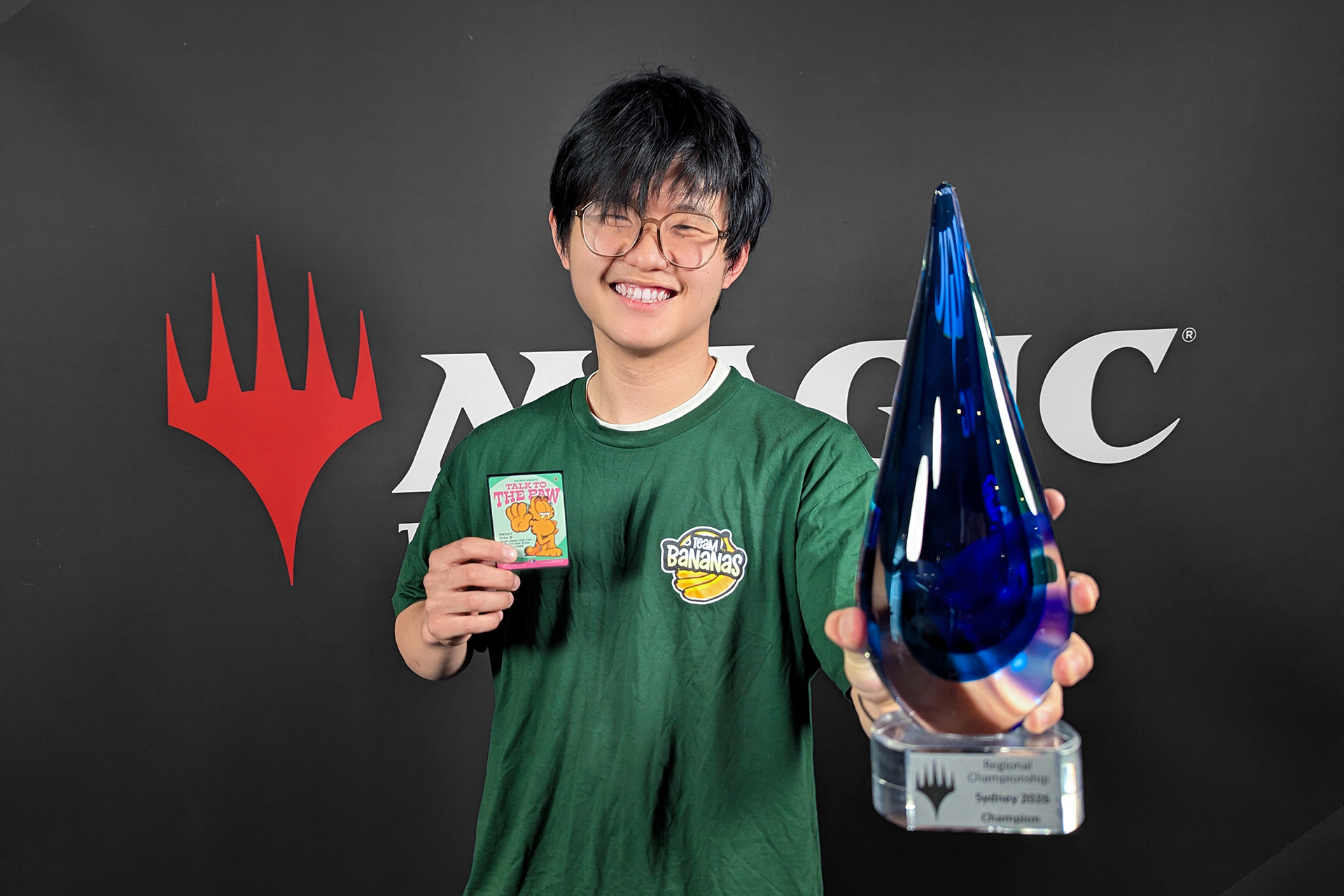
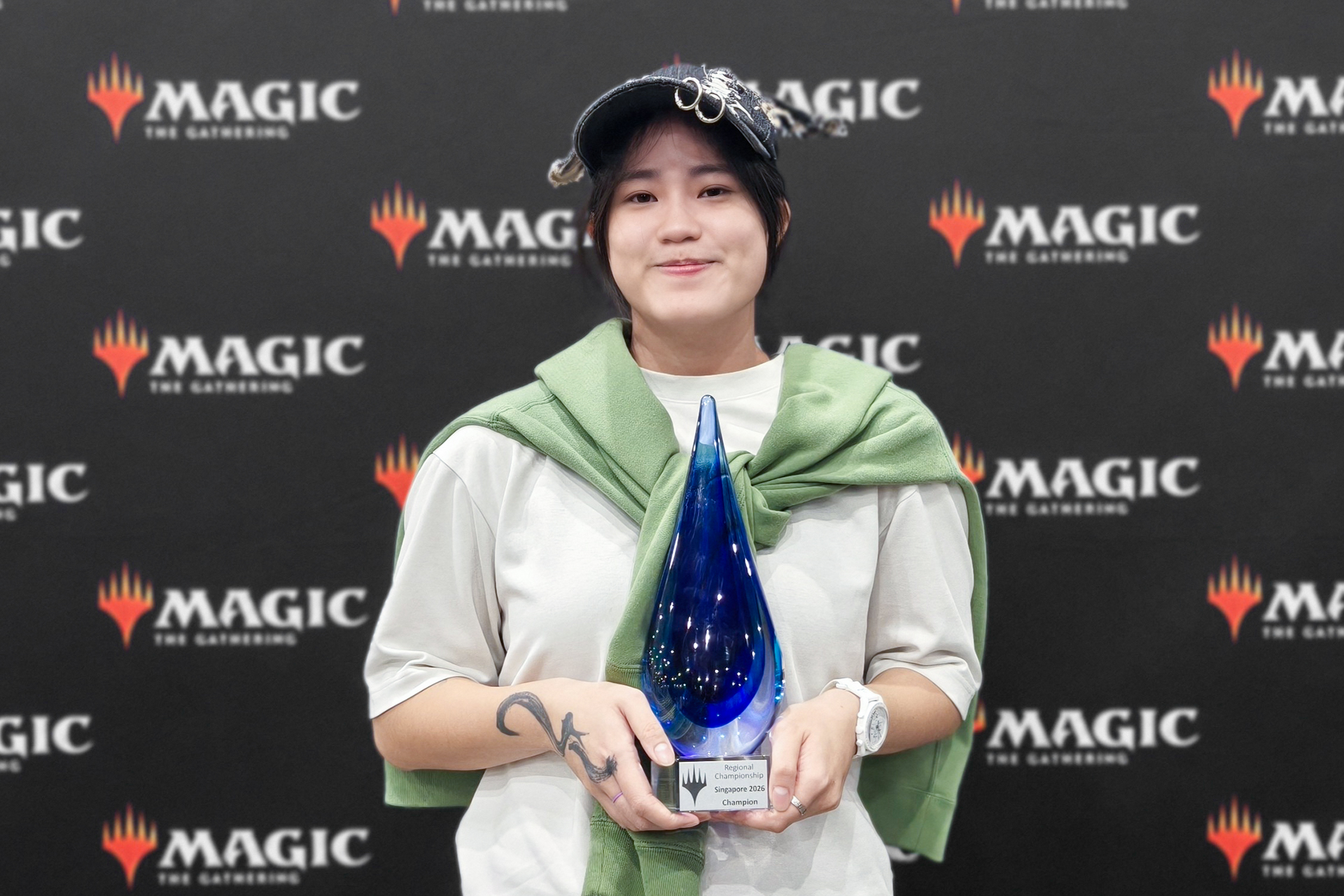

Congratulations to the newly crowned champions, who claimed the trophies in their respective regions and earned invitations to Magic World Championship 33, to be held in Amsterdam in December 2027! Jason Yan took the title in Sydney with Azorius Chant, Ravikorn Nisitsukcharoen emerged victorious in Singapore with Devoted Druid Combo, and Luis Venegas dominated in Buenos Aires with Boros Energy.
In this article, I'll break down the evolving Modern metagame, examine win rates across the major archetypes, and highlight the standout strategies that rose to the top.
The Modern Metagame and Win Rates
Modern is a nonrotating 60-card format based on expansion sets, core sets, and straight-to-Modern sets from Eighth Edition forward, save for cards on the banned list. The table below combines the raw metagame numbers from the aforementioned Regional Championships for Southeast Asia, Australia/New Zealand, and South America, along with the match win rates for each deck archetype (excluding mirror matches, byes, and draws). I assigned archetypes myself based on each deck's contents, disregarding any self-reported deck labels on Melee. Check marks indicate that the 95% confidence interval for an archetype's win rate sat strictly above 50%.
| Archetype | Percentage of Field | Match Win Rate |
|---|---|---|
| 1. Broodscale Combo | 14.2% ↓↓ | 52.3% |
| 2. Izzet Prowess | 11.0% | 44.3% |
| 3. Rakdos Delirium | 8.8% ↑↑ | 58.3% ✓✓ |
| 4. Azorius Chant | 7.2% ↑↑ | 51.6% |
| 5. Boros Energy | 5.4% | 50.4% |
| 6. Izzet Affinity | 5.3% | 50.2% |
| 7. Domain Zoo | 5.0% | 47.3% |
| 8. Esper Blink | 4.2% | 45.8% |
| 9. Eldrazi Tron | 3.8% | 46.7% |
| 10. Esper Goryo's | 3.5% | 50.3% |
| 11. Amulet Titan | 3.3% | 54.5% |
| 12. Ruby Storm | 2.8% | 46.8% |
| 13. Devoted Druid Combo | 1.8% | 51.1% |
| 14. Dimir Midrange | 1.6% | 54.5% |
| 15. Living End | 1.5% | 59.2% |
| 16. Grixis Reanimator | 1.3% | 52.6% |
| 17. Simic Neoform | 1.1% | 64.3% |
| 18. Jeskai Blink | 1.1% | 41.3% |
| 19. Boros Land Destruction | 1.1% | 46.2% |
| 20. Other | 15.9% | 44.5% |
In this table, each archetype name hyperlinks to a top-performing decklist that closely reflects its aggregate build. The "Other" category covers decks that each made up less than one percent of the field, including Eldrazi Trudge, Tameshi Belcher,
Two weeks ago, in my analysis of the preceding five Regional Championships, I covered the dominance of Broodscale Combo, the emergence of Azorius Chant, and the adoption of new Reality Fracture cards across a variety of decks. At the time, I wrote that "the next few weekends will reveal whether Broodscale Combo can hold on to its throne or whether the rest of the format can adapt in time." As it turns out, the metagame is in flux, and Broodscale Combo's grip on that throne has started to slip.
Compared to the preceding five Regional Championships, Broodscale Combo dropped in both popularity (from 17.3% of the field down to 14.2%) and win rate (from 54.8% to 52.3%). Meanwhile, Rakdos Delirium and Azorius Chant, both of which once again proved their favorable matchups against Broodscale Combo over the past two weekends, are climbing rapidly in metagame share. Rakdos Delirium in particular surged from 1.4% to 8.8% of the field, while Azorius Chant rose from 4.6% to 7.2%. Behind them, the field remained remarkably diverse, with a wide variety of archetypes capable of finding competitive success.
With that context in mind, let's take a closer look at five of the most notable stories and Modern developments from the last three Regional Championships.
Azorius Chant Sends Two Players to the World Championship
Out of the four Magic World Championship 33 invitations awarded at the last three Regional Championships, two were claimed by Azorius Chant: Jason Yan won in Sydney, and Martín Dominguez finished second in Buenos Aires. Over the past few months, the deck has emerged as one of the best ways to defeat Broodscale Combo, and the match-by-match results from these recent events confirm that Azorius Chant remains a well-positioned choice against the format's most popular deck.
The archetype has also kept evolving. Dominguez's list, like most successful Azorius Chant builds of late, added
Rakdos Delirium Dominates the Top Tables
The Top 6 eligible players from Southeast Asia and the Top 10 eligible players from Australia/New Zealand earned a Pro Tour invitation. And among the Top 6 and Top 10 players from those events, a combined six were running Rakdos Delirium! Six out of sixteen is an incredible showing. With a dazzling 58.3% win rate, it marks a true breakout for this young archetype. The deck aims to fill the graveyard with self-mill and discard effects, enabling delirium for
The story traces back to the Japan/Korea Regional Championship on October 3, 2026, during the Reality Fracture release weekend, where Hall of Famer Shuhei Nakamura reached the Top 8 by combining
Shannon Dann, who also reached the Top 8 in Sydney, summed up the deck's power succinctly: "
There have also been relevant developments since Nakamura's original build. Five of the six top finishers, including Albert Himawan, who finished second at the Southeast Asia Regional Championship, added
As Rakdos Delirium grows in metagame share, the rest of the field is adapting. In particular, we're seeing more and more copies of
Merfolk Qualifies for the Pro Tour
Merfolk has been part of Modern basically since the format began, but it has spent most of that time on the fringes. It peaked in the mid-2010s with Grand Prix titles in Copenhagen in 2015 and Los Angeles in 2016, and the Modern Horizons sets kept it afloat after that. Even so, it rarely makes up more than a tiny fraction of the field at Regional Championships.
Indeed, across 813 decklists from the last three Regional Championships, I saw only two Merfolk decks. So it's very exciting when enthusiasts of this off-meta archetype find success. Ziene, a familiar name across 5-0 Merfolk results on Magic Online Leagues, took Merfolk to a 9th-place finish at the South America Regional Championship, earning a Pro Tour Nauctis invitation!
Lords like
Mono-Blue Key Unlocks a Pro Tour Invitation
With a Top 8 finish at the Australia/New Zealand Regional Championship, Ian Cormick also earned a Pro Tour Nauctis invitation. His spicy Mono-Blue Key deck grew out of a single idea. "I knew I was going to play eight Moxen and decided to play Mono-Blue to enable
Underneath the card-advantage engine sits an infinite combo.
The spiciest new inclusion in Cormick's deck is a pair of
Simic Neoform Had the Highest Win Rate
At 64.3%, Simic Neoform posted the highest match win rate in the table, while making up just 1.1% of the field. Although none of its pilots made the Top 8, each of the three Regional Championships featured a Simic Neoform player among finishers placing 9th through 16th. The deck retains the powerful game plan of casting
At Pro Tour Magic: The Gathering | Marvel Super Heroes, Simic Neoform posted one of the highest win rates in the field at 60.5%. But at the Regional Championships in September and early October, the deck's win rate dropped to a mere 42.9% and 47%, respectively. How did it swing back to 64.3% all of a sudden? Sure, the metagame shifts over time, but not that rapidly, and the combined share of favorable matchups such as Boros Energy and Izzet Prowess has not changed dramatically.
My best explanation is simply variance. As Simic Neoform was never more than four percent of the field, each preceding statistic was based on a relatively small sample size. When I add up the individual match-by-match results from all these tournaments, Simic Neoform's overall win rate comes to 48.5%, with a 95% confidence interval ranging from 45.1% to 52%. In other words, the deck is most likely close to average in Modern, with its outlier results on various weekends largely due to chance. This shows how small samples can easily lead us astray.
What's Next for Modern?
This cycle of Regional Championships first established Broodscale Combo as the deck to beat, and then Azorius Chant and Rakdos Delirium emerged as excellent ways to defeat it. This shows that in a format whose card pool stretches back to 2003, there is still plenty of room for innovation and metagame churn.
One event remains before this round of Modern Regional Championships concludes: the MIT Championship for Chinese Taipei on November 1, 2026. Afterward, fans of the format can compete in special tournaments on Magic Online, including a Modern RC Qualifier on November 26, a Modern Showcase Challenge on November 28, and a Modern Showcase Qualifier on December 5.
And the new year will kick off with plenty of excitement for Modern fans as well, as Pro Tour Nauctis brings the format to the big stage at MagicCon: Detroit on February 26–28, 2027.