
Hello, and welcome back to Metagame Mentor, your weekly guide to the top decks and latest Constructed developments from Magic's most prestigious events. Magic World Championship 31 delivered an electrifying Top 8, spotlighting breakout decks, some of the game's most legendary players, and intensely contested matches. This tournament revealed just how dramatically Standard has evolved, setting the pace for an engaging season ahead as we look toward Magic Spotlight: The Avatar in early January and the continuation of the current Standard round of Regional Championship Qualifiers.
While the World Championship measured skill across both Limited and Standard, today's article will focus exclusively on the Standard rounds, examining win rates and standout decks from the tournament. By setting aside the draft portion and looking beyond just the Top 8, we can capture a broader perspective on the key Standard lessons from the event as a whole.
Congratulations to Seth Manfield!

Before diving into the decks, let me extend my congratulations to Team TCGplayer's Seth Manfield, who clinched his second World Championship trophy and further cemented his status as one of the game's all-time greats. Manfield is now the third player in Magic's history, alongside Javier Dominguez and Shahar Shenhar, to claim the title of World Champion twice.
His path to the top was far from straightforward. Manfield opened Magic World Championship 31 with a discouraging 0-2 stumble in the draft rounds. But with more than two decades of competitive Magic experience, having won the 2015 World Championship, Pro Tour Ixalan in 2017, and Pro Tour Murders at Karlov Manor in 2024, this Magic Hall of Fame member is no stranger to adversity. From that rocky 0-2 start, he went on an astonishing 10-0 surge to secure his Top 8 berth. And on Sunday, he posted a flawless 9-0 record in games with wins over Ken Yukuhiro, Derrick Davis, and Akira Shibata.
Manfield won a $100,000 cash prize, the stunning Black Lotus trophy, and the honor of having his likeness immortalized on a future Magic card. Every Top 8 competitor earned invitations to each Pro Tour and the World Championship in 2026, as well as a generous slice of the $1,000,000 prize pool.
Izzet Lessons, filled with commons and uncommons from Magic: The Gathering® | Avatar: The Last Airbender™, was the breakout deck of the tournament. The deck is built around a dense suite of Lesson cards, including various efficient removal spells, making it easy to put three of them in the graveyard. With
Across the Swiss rounds, Izzet Lessons posted a strong 57% win rate (excluding mirrors, draws, and byes), yet there was a notable performance gap depending on the inclusion of
These numbers underscore the sheer potency of the Lessons engine and the
The Standard Win Rates at Magic World Championship 31
The metagame breakdown highlighted the popularity of Izzet Lessons, Temur Otters, Bant Airbending, and Izzet Looting. Below, you'll find a table with each archetype's non-mirror, non-draw, non-bye match record and win rate from the Standard Swiss rounds. Each archetype name links to a representative sample decklist for those interested in exploring specific builds.
| Archetype | Number of Players | Record and Win Rate |
|---|---|---|
| Golgari Dragons | 1 | 6-2-0 (75.0%) |
| Dimir Midrange | 2 | 11-5-0 (68.8%) |
| Mono-Red Aggro | 3 | 10-6-0 (62.5%) |
| Sultai Reanimator | 6 | 25-16-0 (61.0%) |
| Jeskai Control | 10 | 33-23-3 (58.9%) |
| Izzet Prowess | 9 | 27-20-0 (57.4%) |
| Simic Otters | 1 | 4-3-1 (57.1%) |
| Izzet Lessons | 23 | 65-49-0 (57.0%) |
| Golgari Ouroboroid | 5 | 15-13-0 (53.6%) |
| Orzhov Demons | 1 | 2-2-0 (50.0%) |
| Temur Otters | 20 | 43-55-0 (43.9%) |
| Dimir Bounce | 3 | 7-9-0 (43.8%) |
| Izzet Looting | 14 | 22-30-0 (42.3%) |
| Simic Ouroboroid | 7 | 12-19-0 (38.7%) |
| Bant Airbending | 16 | 26-47-0 (35.6%) |
| Jeskai Artifacts | 4 | 6-13-0 (31.6%) |
| Boros Mobilize | 1 | 1-3-0 (25.0%) |
The impact of Magic: The Gathering | Avatar: The Last Airbender rippled across the tournament. While much of the pre-event hype centered on
The Standard Decks and Players with Six or More Wins
For reference, here's a list of all decks with at least six Standard non-bye wins at Magic World Championship 31, sorted by their combined Swiss and Top 8 non-bye record in descending order of win rate:
- Seth Manfield, 9-0, Izzet Lessons (Champion)
- Michael Plummer, 7-1, Izzet Prowess
- Connor Mackenzie, 7-1, Izzet Looting
- Yoshihiko Ikawa, 6-1-1, Jeskai Control
- Ken Yukuhiro, 6-2, Sultai Reanimator
- Arne Huschenbeth, 6-2, Temur Otters
- Matt Nass, 6-2, Izzet Lessons
- Kenta Masukado, 6-2, Dimir Midrange
- Shuhei Nakamura, 6-2, Sultai Reanimator
- Chris Botelho, 6-2, Jeskai Control
- Ben Stark, 6-2, Golgari Dragons
- Gabriel Nassif, 6-2, Izzet Lessons
- Marcio Carvalho, 6-2, Izzet Prowess
- Guillermo Sulimovich, 6-2, Bant Airbending
- Shaun Henry, 6-3, Temur Otters (Semifinalist)
- Akira Shibata, 7-4, Izzet Lessons (Finalist)
- Derrick Davis, 6-4, Izzet Lessons (Semifinalist)
Next, let's take a closer look at the top-performing decks, explore the advantages they bring to the table, and cover the specific pressure points they can exploit against Izzet Lessons.
Golgari Dragons
Among all archetypes, Golgari Dragons achieved the highest overall win rate, with Hall of Famer Ben Stark posting an impressive 6-2 in the Standard rounds. Stark, who previously pioneered the Orzhov Pixie deck that evolved into a top-tier Standard deck this year, has a reputation for building lists that are worth a closer look. His latest creation exploits
Stark went 2-1 against Izzet Lessons across the weekend, and his decklist showcases two effective approaches for gaining an edge in that matchup. The first is access to enchantment or artifact removal to dismantle
Dimir Midrange
After the bans of
Interestingly, the two Dimir Midrange pilots went a combined 4-1 against Izzet Lessons at the World Championship—a result that surprised me at first. On paper, Izzet Lessons has several efficient answers.
What the Dimir deck does have, however, is
Mono-Red Aggro
Only three players brought Mono-Red Aggro to Magic World Championship 31: Percy Fang, William Araujo, and Quinn Tonole. However, all are known devotees of the archetype, with excellent red aggro results throughout the season. Their combined 10-6 Standard record at the World Championship is therefore a bit tricky to interpret in terms of the deck's overall place in the emerging metagame, but taken at face value, it's an excellent win rate.
Quinn Tonole, a Mono-Red expert, was the lone pilot to advance to Day Two, ultimately posting a 5-3 record with a list whose only new addition was two copies of
In theory, Mono-Red should struggle against the efficient removal suite of Izzet Lessons, but Tonole's list leans on four copies of
Sultai Reanimator
Sultai Reanimator is a graveyard-centric combo deck that intends to fill the graveyard while digging for
Across the event, Sultai Reanimator went 6-4 against Izzet Lessons, and that result feels like a realistic reflection of a favorable matchup. In Game 1, Izzet Lessons applies little pressure and has virtually no answer to the deck's
Jeskai Control
Chris Botelho, who qualified at the Regional Championship in Hartford with a finely tuned Azorius Control list, brought a similarly outstanding Jeskai Control build to Magic World Championship 31. He piloted it to a 6-2 record in Standard. While most Jeskai Control lists use
To me, this highlights one of the clearest paths to defeating Izzet Lessons: go over the top with a powerful engine, preferably one driven by enchantments or artifacts that can outscale their synergies while sidestepping their hyper-efficient creature removal.
What's Next for Standard?
Magic World Championship 31 has firmly established Izzet Lessons as the deck to beat in Standard, though it flew under the radar before the event. Now, it has a target on its back. As we've seen throughout this article, there are multiple ways to combat the archetype: graveyard hate, artifact or enchantment removal, punishing their noncreature spells, or deploying an even more powerful engine that sidesteps their efficient creature removal.
While

If you want to test your mettle in competitive Standard, then the current round of RCQs uses that format and runs through March 22, 2026. You can find an RCQ near you by checking with your local game store or visiting your regional organizer's website.
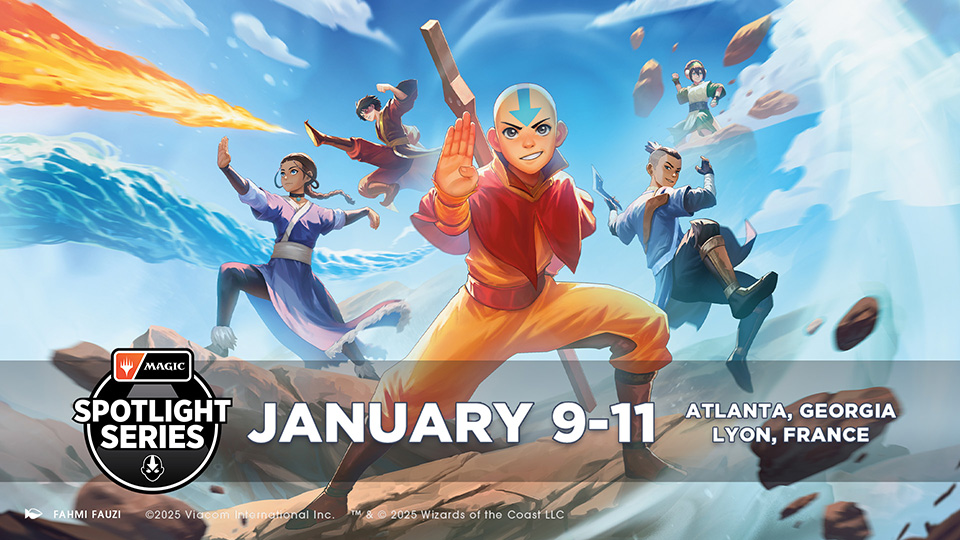
If you're aiming even higher, Magic Spotlight: The Avatar will take place in Lyon, France, and Atlanta, Georgia, on January 9–11, 2026. Each marquee two-day open tournament features a $50,000 prize pool, awards exclusive promo cards, and rewards the Top 8 finishers with coveted Pro Tour invitations.
As we move forward, these events promise to provide a thrilling showcase of competitive Magic play, and I look forward to analyzing the metagame in the months to come.